

Fill Dirt vs. Topsoil: Understanding the Key Differences for Your Project
Introduction
When planning a construction or landscaping project, choosing the right soil type is critical. Fill dirt and topsoil are commonly used but serve very different purposes.
This post explains the differences between fill dirt and topsoil so you can select the best material for your project’s success.
What Is Fill Dirt?
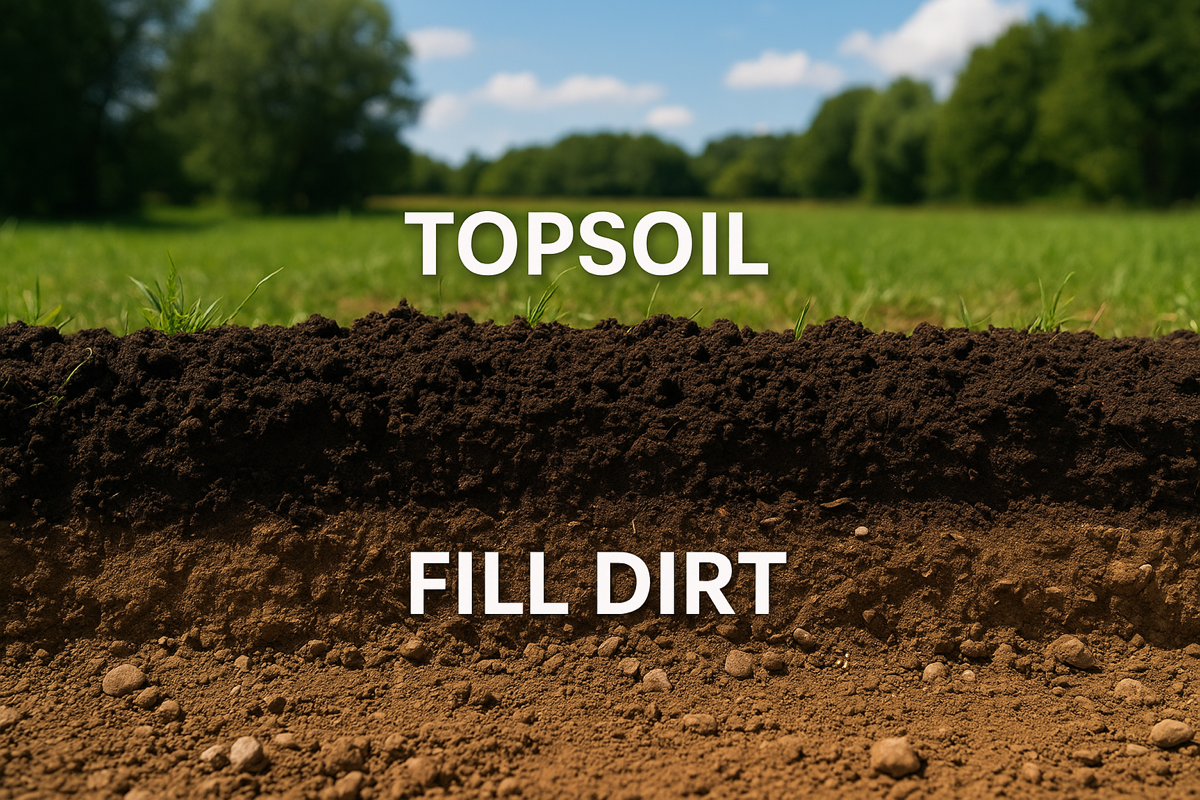
- Subsoil mostly free of organic material
- Used primarily for filling holes, leveling land, and providing a stable base
- Typically heavier and denser than topsoil
What Is Topsoil?
- The uppermost layer of soil, rich in organic matter and nutrients
- Ideal for supporting plant growth, lawns, and gardens
- Usually darker in color and looser in texture
When to Use Fill Dirt
- Building foundations or raising land levels
- Creating a stable base under driveways, patios, or buildings
- Filling trenches or holes
When to Use Topsoil
- Planting lawns, gardens, and landscaping beds
- Improving soil fertility and drainage for vegetation
- Covering fill dirt to prepare for planting
Why Mixing Them Up Can Cause Problems
- Using fill dirt as a planting medium can stunt plant growth due to lack of nutrients
- Using topsoil for structural fill can lead to settling and instability
Find Quality Fill Dirt and Topsoil Locally with Earth Kingz
Earth Kingz connects you with local suppliers of both fill dirt and topsoil, helping you get the right soil for your project quickly and affordably.
Conclusion
Understanding the difference between fill dirt and topsoil helps ensure your project’s foundation and landscaping thrive. Choose wisely and source quality materials to save time and money.
Need fill dirt or topsoil for your project?
Find or list soil materials near you on Earth Kingz.